Neck Pain Treatment in Huntington
You turn your head and something catches. You have iced it, stretched it, waited for it to loosen on its own. If your neck is still calling the shots on what you can do, one evaluation is where that changes.
What causes neck pain?
Neck pain builds from more places than people expect: posture, old injuries, stress, even how you sleep. The cervical spine is mobile but also delicate, which means small daily habits add up fast. Finding the actual driver behind your pain is what separates a real fix from another round of temporary relief.
Hours spent looking down at a phone or leaning toward a screen pull your head forward off its natural position over your shoulders. For every inch your head drifts forward, the muscles at the base of your neck and upper back have to work harder just to hold it up. Over months, that constant overload turns into deep, nagging stiffness and soreness that no single stretch fixes. Postural retraining and targeted strengthening address the actual habit, not just the ache it creates.
A sudden jolt, whether from a car accident, a fall, or a hard hit during sports, can strain the muscles, ligaments, and joints of the cervical spine faster than they can absorb the force. The result is stiffness, limited motion, and pain that sometimes takes a day or two to fully surface. Whiplash responds well to early, guided movement paired with manual therapy, and most people recover full motion and comfort well before it becomes a long-term problem.
As the discs and joints of the cervical spine age, they naturally lose some height and cushioning, and the surrounding tissues take on more of the workload. This shows up on scans of plenty of pain-free people, so degeneration by itself is not the whole story. What actually matters is how well the muscles around your neck are supporting those joints. Keeping them strong and mobile is what keeps age-related change from turning into daily pain.
Stress has a physical address, and for a lot of people it lives in the neck and upper shoulders. When you are tense, those muscles stay contracted far longer than they are built for, which leads to tight knots, reduced blood flow, and a dull, constant ache. Manual therapy releases that built-up tension directly, while breathing and postural strategies help keep it from reloading the moment a stressful week hits again.
A pillow that is too high, too flat, or simply wrong for how you sleep can hold your neck in an awkward position for hours every single night. That sustained strain adds up, especially for side and stomach sleepers, and often shows up as stiffness first thing in the morning that eases as the day goes on. Adjusting your setup alongside targeted mobility work usually resolves this faster than people expect.
When a disc or joint in the neck irritates a nearby nerve root, the pain does not always stay local. It can travel into the shoulder blade, down the arm, and sometimes into the hand, often with numbness or tingling along the way. Identifying exactly which level is involved is what makes treatment effective. With the right manual therapy and nerve gliding exercises, most radiating nerve pain calms significantly.
How physical therapy in Huntington helps.
Neck pain almost always responds to the right hands-on care before anything more invasive is on the table. A skilled therapist starts by finding exactly which joints, muscles, or nerves in your cervical spine are driving your symptoms, then treats that directly with manual therapy to release restriction and calm irritation. Once your neck is moving more freely, the focus shifts to postural retraining and targeted strengthening for the deep neck flexors and upper back, the muscles most people never train but rely on constantly. If your days are spent at a desk, you also get practical ergonomic guidance so the setup that contributed to your pain stops working against you. Every session is one on one, built around how your neck responds, not a generic printout. The result is a neck that can look down at your phone, turn to check a blind spot, and get through a full workday without tightening up on you.
What to expect from your recovery.
Evaluation
Your first visit maps exactly which structures in your neck are driving your pain: disc, joint, muscle, or nerve. We test your range of motion, check your posture, and rule out anything needing outside referral, so you leave with a clear explanation and an honest timeline.
Hands-on relief
Manual therapy releases the restriction and tension holding your neck hostage, while gentle mobility work restores the motion you have been missing. Every technique has a reason, and we explain what it is as we go.
Postural rebuilding
As pain eases, we build the strength in your deep neck flexors and upper back that keeps your head properly supported. This is the phase that keeps the stiffness from creeping back once you are at your desk again.
The staff and facility at Universus are fantastic. Steven is a pleasure to work with, very knowledgeable and encouraging. The front desk staff knew me from day one.
Pain rarely travels alone.
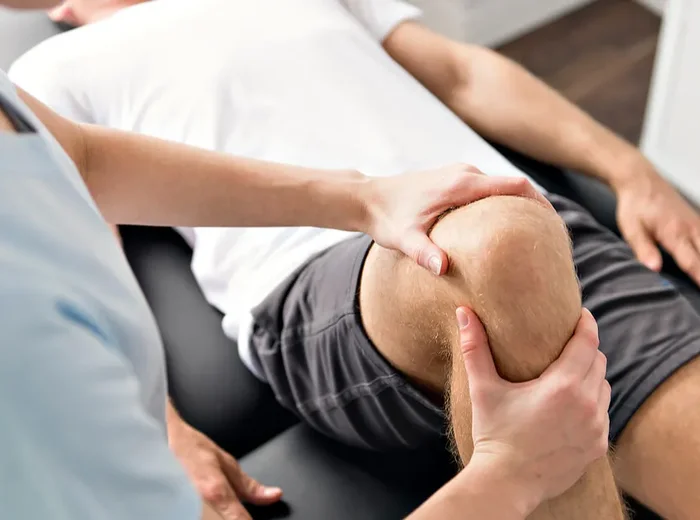
Hip & Knee Pain
When the hips and knees stop sharing load well, the low back often takes the hit. We treat the whole chain.

Joint Pain
Stiff, aching joints that limit your day. We restore the mechanics first, then build the strength.

Headaches
Tension that starts in the neck and spine can drive stubborn headaches. Relief starts with the source.
Ready when you are.
Friday: 7:15am–6:30pm
Saturday: 8:00am–2:45pm
Sunday: Closed