Hip Replacement Surgery Treatment in Huntington
Whether surgery is still ahead of you or already behind you, how your hip performs next depends on the work you put in around it. One evaluation shows you exactly where to start.
What causes the need for hip replacement surgery?
Hip replacement becomes the right call when the joint itself, not just the muscles around it, has worn past what conservative care can manage. Knowing why your hip reached this point, and how prepared you are heading in, shapes how quickly and completely you recover. The stronger and more mobile you are before surgery, the smoother everything after it tends to go.

Years of cartilage wear eventually leave bone grinding on bone inside the hip joint. Pain becomes constant, motion narrows, and simple things like putting on shoes or getting out of a car turn painful. When conservative care no longer keeps up with the damage, replacing the joint is often what finally gives lasting relief. A hip conditioned with strength and mobility work beforehand tends to recover faster and more completely once the new joint is in place.
When blood supply to the top of the femur is disrupted, the bone tissue there can weaken and collapse over time. This often develops gradually, with pain that starts subtly and builds as the joint surface breaks down. It can affect younger, otherwise healthy people, not just those with years of wear and tear. Depending on how far it has progressed, replacement is often the most reliable way to restore a joint that moves and functions well again.
A broken hip, especially one involving the ball of the joint, does not always heal in a way that holds up to normal walking and standing. Some fractures need a replacement right away, while others lead to arthritis or instability years down the road. Either path points toward the same goal: a joint that lets you stand, walk, and move through your day without the old injury continuing to limit you.
Anti-inflammatories, injections, and physical therapy manage hip pain well for most people, for a long time. But once the joint has degenerated enough, those approaches stop moving the needle and the pain and stiffness keep winning. Reaching that point is not a failure on your part. It is simply the signal that the joint itself, not the muscles around it, has become the limiting factor.
Going into surgery with strong hip and core muscles gives the new joint a foundation to work from on day one. Patients who build strength and mobility beforehand tend to get up sooner, walk with better mechanics, and regain independence faster than those who wait until after surgery to start. Pre-hab is not extra credit. It is one of the biggest factors you control before the operation ever happens.
How well a hip replacement recovery goes depends less on the surgery itself and more on what happens in the weeks after. Following your hip precautions, restoring a normal walking pattern, and progressively rebuilding strength all shape whether you return to full function or settle for less. A structured rehab plan built around your specific progress is what turns a successful surgery into a fully successful recovery.
How physical therapy in Huntington helps.
Hip replacement surgery works best when it is supported on both sides of the operating table. Before surgery, physical therapy strengthens the muscles around your hip and core so you go in physically prepared, not just medically cleared. In the first days and weeks after surgery, care focuses on safe, guided mobility: getting you up, walking, and moving while respecting your hip precautions and protecting the new joint. As healing progresses, the focus shifts to rebuilding the strength and control your hip needs to walk without a limp, climb stairs with confidence, and return to the activities surgery was supposed to give you back. Every session is one on one, built around exactly where you are that week, not a generic post-op handout. Most patients who commit to both the pre-hab and the rehab return to a level of function that makes the surgery clearly worth it.
What to expect from your recovery.
Pre-surgical conditioning
Before surgery, we strengthen the muscles supporting your hip and core, improve your mobility, and teach you the movements and precautions you will need after the operation. Patients who go in stronger tend to come out walking sooner.
Early post-op mobility
In the first weeks after surgery, we focus on safe movement: getting you up, walking, and regaining range of motion while respecting your hip precautions. We manage swelling and pain so you can progress with confidence.
Return to function
As healing progresses, we rebuild the strength and control your hip needs for normal walking, stairs, and daily activity without a limp. This is the phase that turns a successful surgery into a full return to the life you want back.
Universus is top notch. I alternate between two therapists and they are both amazing. Very professional, very experienced and very helpful in providing assessments and guidance. I couldn't have picked a better place for physical therapy.
Pain rarely travels alone.
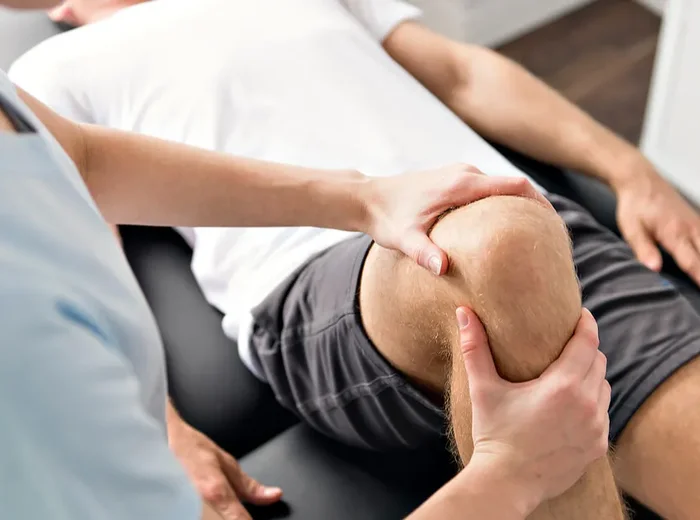
Hip & Knee Pain
When the hips and knees stop sharing load well, the low back often takes the hit. We treat the whole chain.

Joint Pain
Stiff, aching joints that limit your day. We restore the mechanics first, then build the strength.

Headaches
Tension that starts in the neck and spine can drive stubborn headaches. Relief starts with the source.
Ready when you are.
Friday: 7:30am–5:30pm
Saturday: Closed
Sunday: Closed