Knee Replacement Surgery Treatment in Huntington
Whether knee replacement surgery is still on the calendar or already behind you, how well your knee bends, straightens, and carries you again depends on the work around it. One evaluation shows you exactly where to start.
What causes the need for knee replacement surgery?
Knee replacement becomes the right call when the joint itself, not just the muscles around it, has worn beyond what conservative care can manage. Knowing why your knee reached this point, and how prepared you are heading in, shapes how quickly and completely you recover afterward. The stronger your knee is before surgery, the better it tends to perform after it.
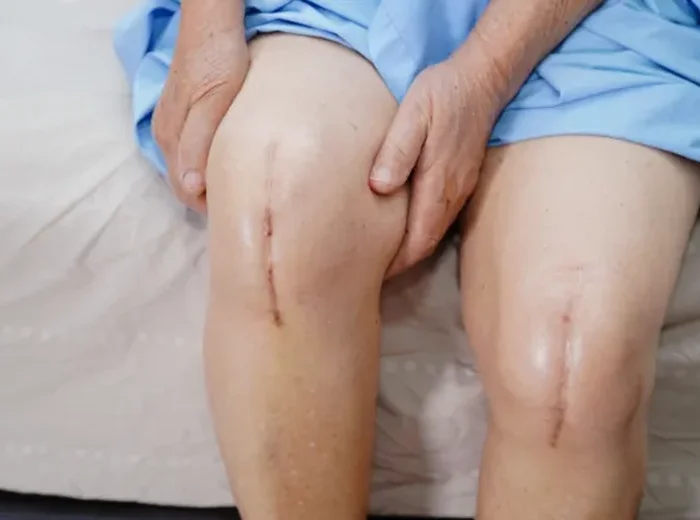
Years of cartilage wear eventually leave the bones of the knee grinding against each other with every step. Pain becomes constant, swelling shows up after activity, and the knee stiffens more each season. When strengthening, injections, and bracing no longer keep up with the damage, replacing the worn surfaces is often what finally restores comfortable movement. A knee conditioned with strength work beforehand tends to bend, straighten, and bear weight more easily once the new joint is in.
A significant knee injury, whether a fracture, ligament tear, or meniscus tear, changes how the joint moves and wears for years afterward. Cartilage that took the brunt of the original injury tends to break down faster than the rest of the joint. Even after a full recovery from the initial injury, the altered mechanics can eventually catch up, making a replacement the most reliable path back to comfortable movement.
Physical therapy, injections, and anti-inflammatories manage knee arthritis well for most people, often for years. But once the joint surfaces have worn down enough, those approaches stop keeping pace with the pain and stiffness. Reaching that point simply means the joint itself has become the limiting factor, not a sign that earlier treatment failed you.
When knee pain and stiffness start dictating what you can and cannot do, whether it is stairs, standing from a chair, or walking through a store, quality of life becomes part of the decision. Replacement is often considered once the joint limits daily function enough that conservative care can no longer close the gap.
Going into surgery with strong quadriceps and hip muscles gives your new knee a stable foundation from day one. Patients who build strength and range of motion beforehand tend to regain movement faster and need less time to get back on their feet than those who start from scratch after surgery. Pre-hab is one of the most controllable factors in how smooth your recovery feels.
How well a knee replacement heals depends heavily on what happens in the weeks that follow. Restoring full bend and straightening, controlling swelling early, and progressively rebuilding strength and gait all shape whether you return to normal activity or settle for a stiffer, weaker knee. A structured, personalized rehab plan is what turns a successful surgery into a fully successful recovery.
How physical therapy in Huntington helps.
Knee replacement surgery works best when physical therapy supports it before and after the operation. Pre-surgical strengthening and education prepare your quadriceps, hips, and overall conditioning so you go into surgery physically ready, not just medically cleared. In the early weeks after surgery, care focuses on restoring your knee's bend and straightening, controlling swelling, and getting you moving safely again. As healing progresses, the focus shifts to progressive strengthening and gait retraining so you can walk normally, climb stairs, and return to daily life and light activity without pain holding you back. Every session is one on one, built around exactly where your knee is that week, not a generic handout of exercises. Most patients who commit to both phases of care regain a knee that moves, bends, and carries them through daily life the way they hoped surgery would deliver.
What to expect from your recovery.
Pre-surgical strengthening
Before surgery, we build strength in your quadriceps, hips, and core, and make sure your knee has as much motion as possible going in. Patients who prepare beforehand tend to recover function faster once the new joint is in place.
Early post-op mobility
In the first weeks after surgery, we focus on restoring your knee's bend and straightening, managing swelling, and getting you walking safely again. Small, steady gains here set the pace for everything that follows.
Return to function
As healing progresses, we rebuild the strength and gait control your knee needs to walk normally, climb stairs, and return to daily activity without pain. This is the phase that turns surgery into real, lasting function.
The staff and facility at Universus are fantastic. Steven is a pleasure to work with, very knowledgeable and encouraging. The front desk staff knew me from day one.
Pain rarely travels alone.
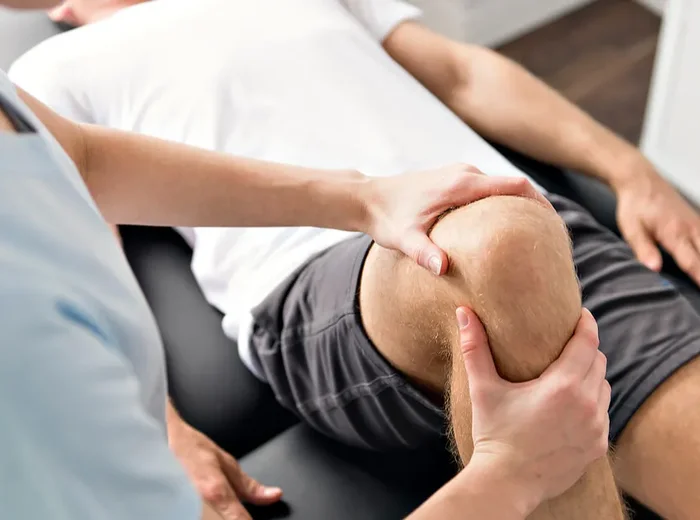
Hip & Knee Pain
When the hips and knees stop sharing load well, the low back often takes the hit. We treat the whole chain.

Joint Pain
Stiff, aching joints that limit your day. We restore the mechanics first, then build the strength.

Headaches
Tension that starts in the neck and spine can drive stubborn headaches. Relief starts with the source.
Ready when you are.
Friday: 7:15am–6:30pm
Saturday: 8:00am–2:45pm
Sunday: Closed